
Right-angled triangles are everywhere - from the ladders you climb...
 Mathematics5 visualizações·Atualizado Jun 10, 2026·9 páginas
Master Trigonometry: Learn SOHCAHTOA for Real-Life Problems

1 / 9
1
of 9
The Basics of Right-Angled Triangles
You'll use trigonometry in loads of practical situations like construction, navigation, and even video game design. The key is mastering the relationship between angles and side lengths in triangles with one 90° angle.
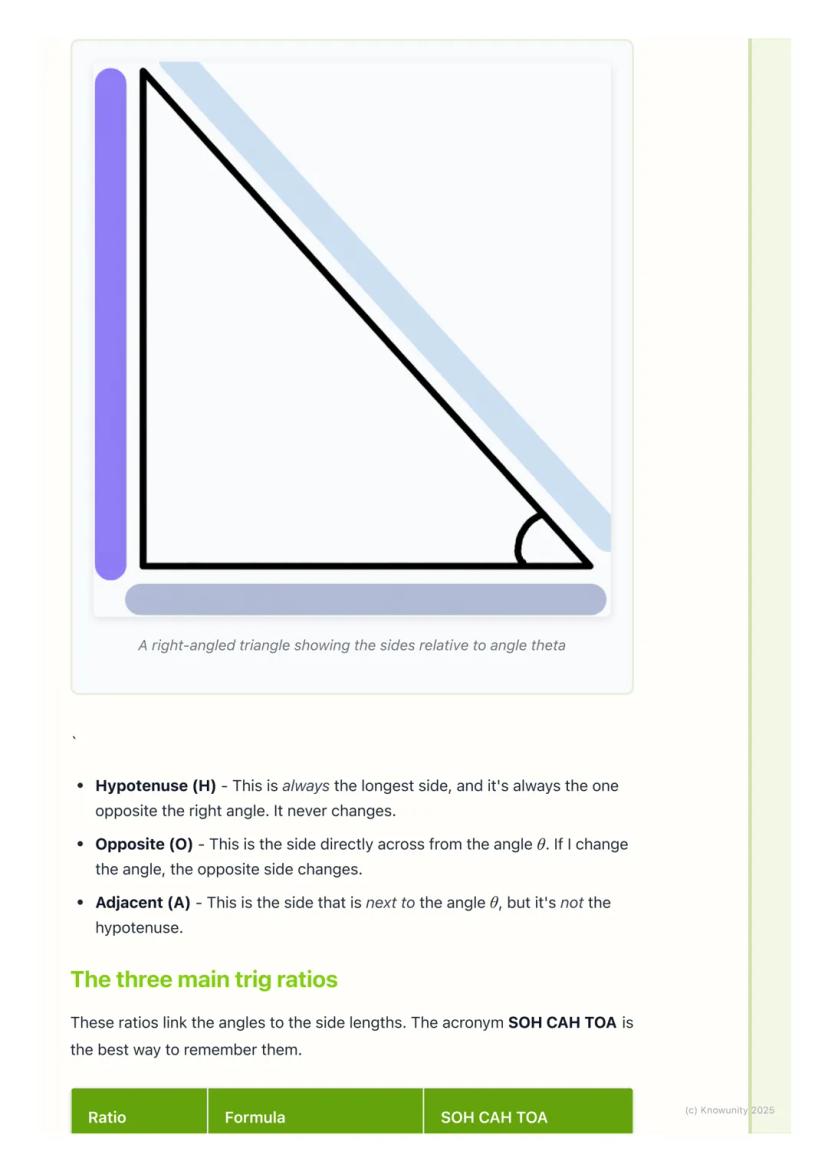
Getting the labelling right is absolutely crucial. The side names depend on which angle you're focusing on (usually called theta or θ). The hypotenuse is always the longest side opposite the right angle - that never changes.
The opposite side sits directly across from your angle θ. If you change the angle, the opposite side changes too. The adjacent side is next to angle θ, but it's not the hypotenuse.
Key Tip: Always label your triangle sides before attempting any calculation - this prevents costly mistakes!
2
of 9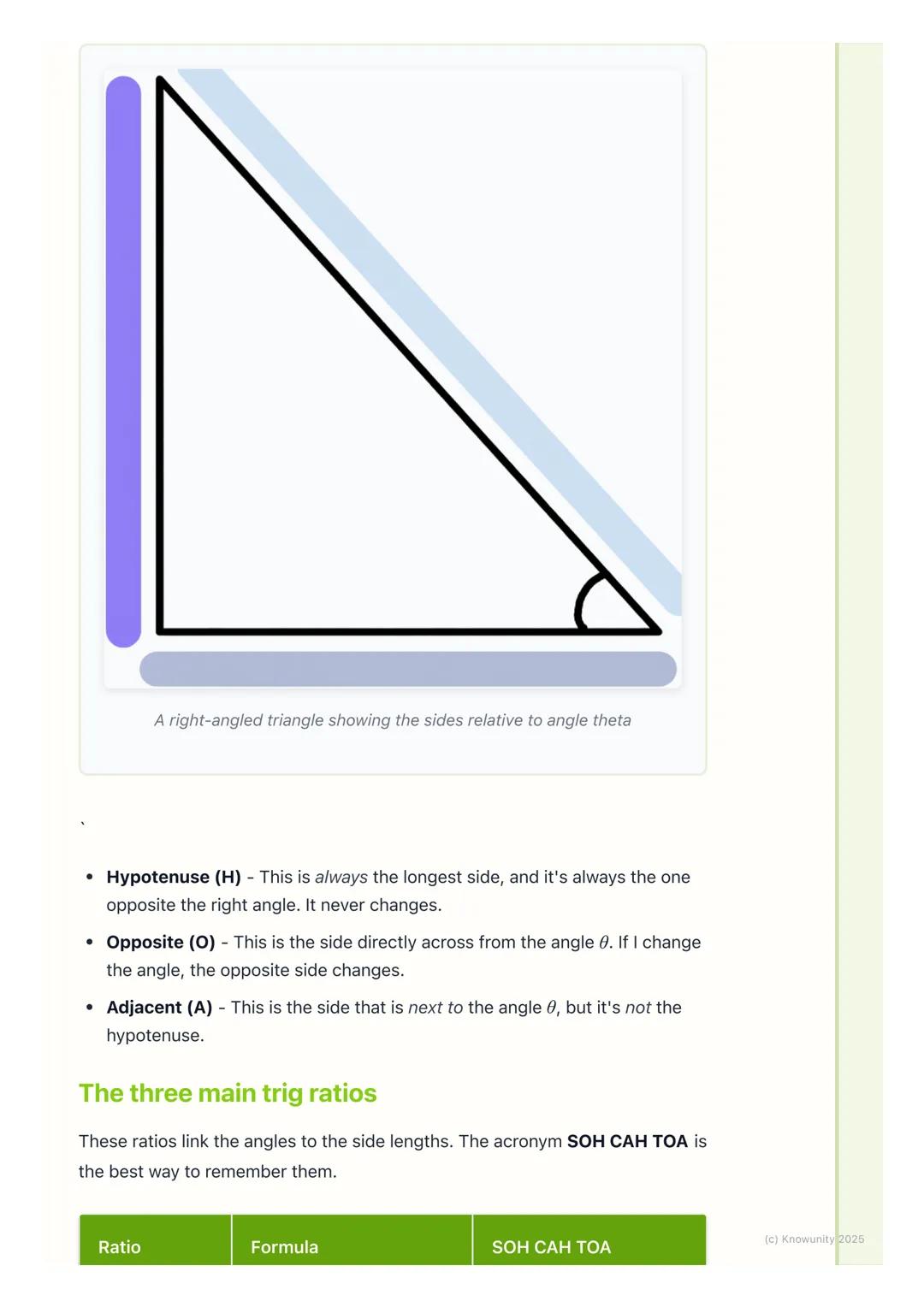
SOH CAH TOA - Your Best Friend
SOH CAH TOA is the magic acronym that'll save you in every exam. It represents the three main trigonometric ratios that link angles to side lengths.
SOH means sin(θ) = Opposite/Hypotenuse. CAH means cos(θ) = Adjacent/Hypotenuse. TOA means tan(θ) = Opposite/Adjacent.
These ratios ONLY work for right-angled triangles - don't try using them elsewhere! You'll encounter two main problem types: finding missing sides and finding missing angles.
Remember: These ratios are your toolkit for solving any right-angled triangle problem you'll face.
3
of 9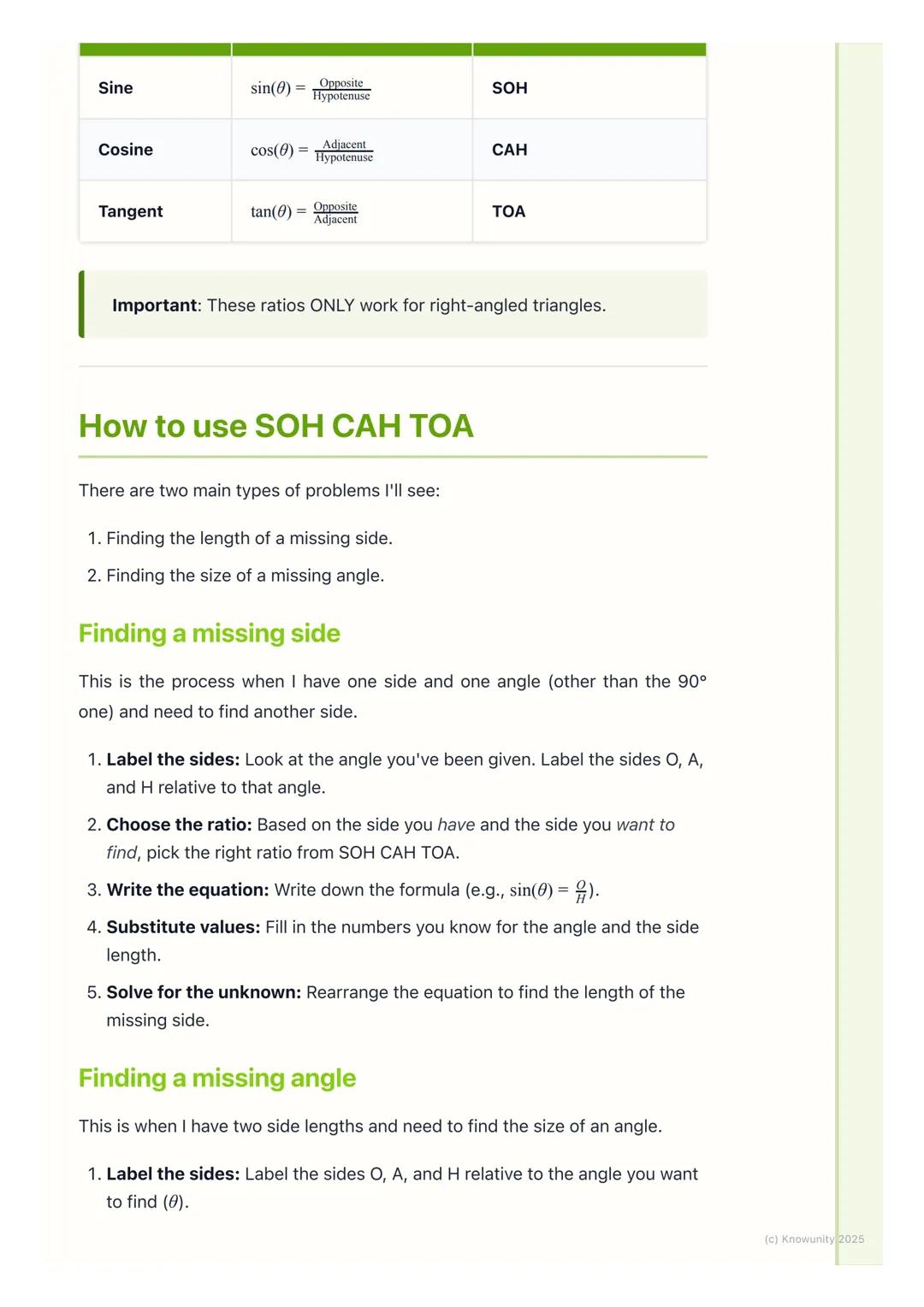
Finding Missing Sides
When you've got one side and one angle (besides the 90° one), finding another side becomes straightforward with the right approach.
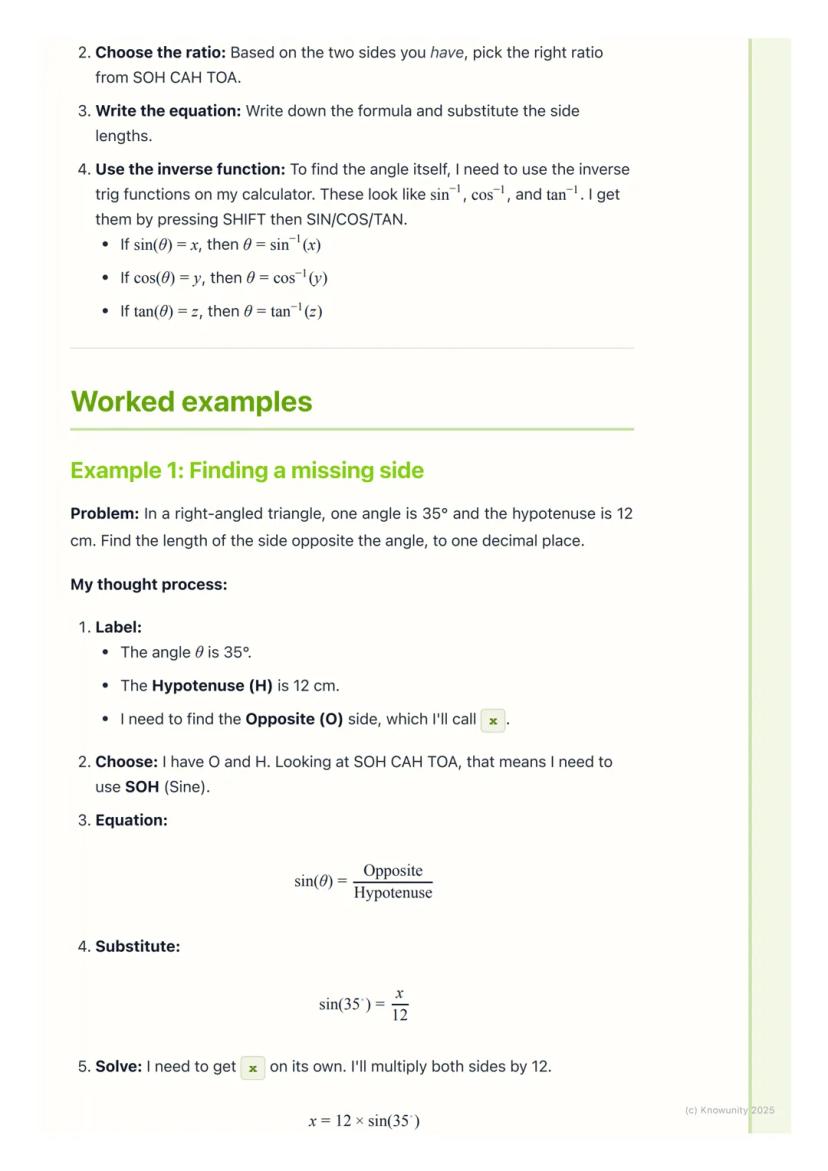
Follow this foolproof process: Label the sides O, A, and H relative to your given angle. Choose the correct ratio from SOH CAH TOA based on what you have and what you need. Write the equation and substitute your known values.
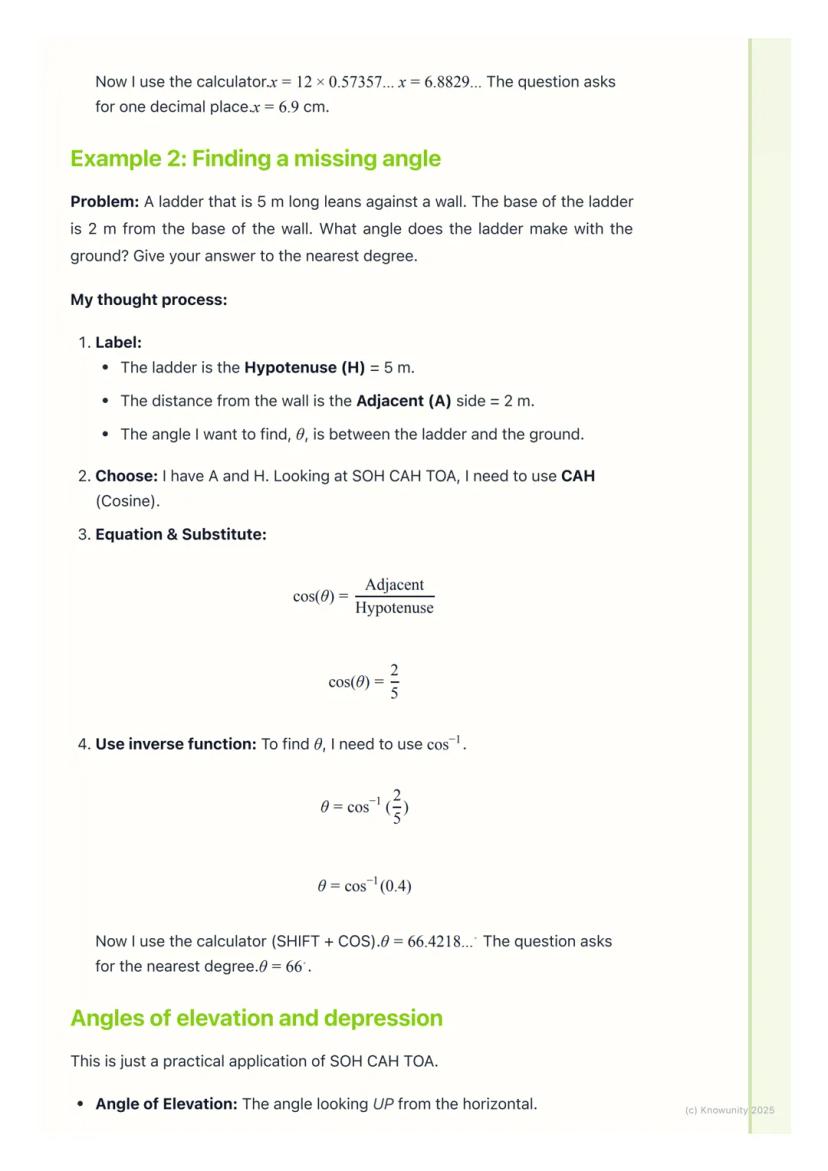
Finally, solve for the unknown by rearranging the equation. For example, if sin(35°) = x/12, then x = 12 × sin(35°) = 6.9 cm.
Pro Tip: Always double-check your labelling - mixing up opposite and adjacent is the most common mistake students make.
4
of 9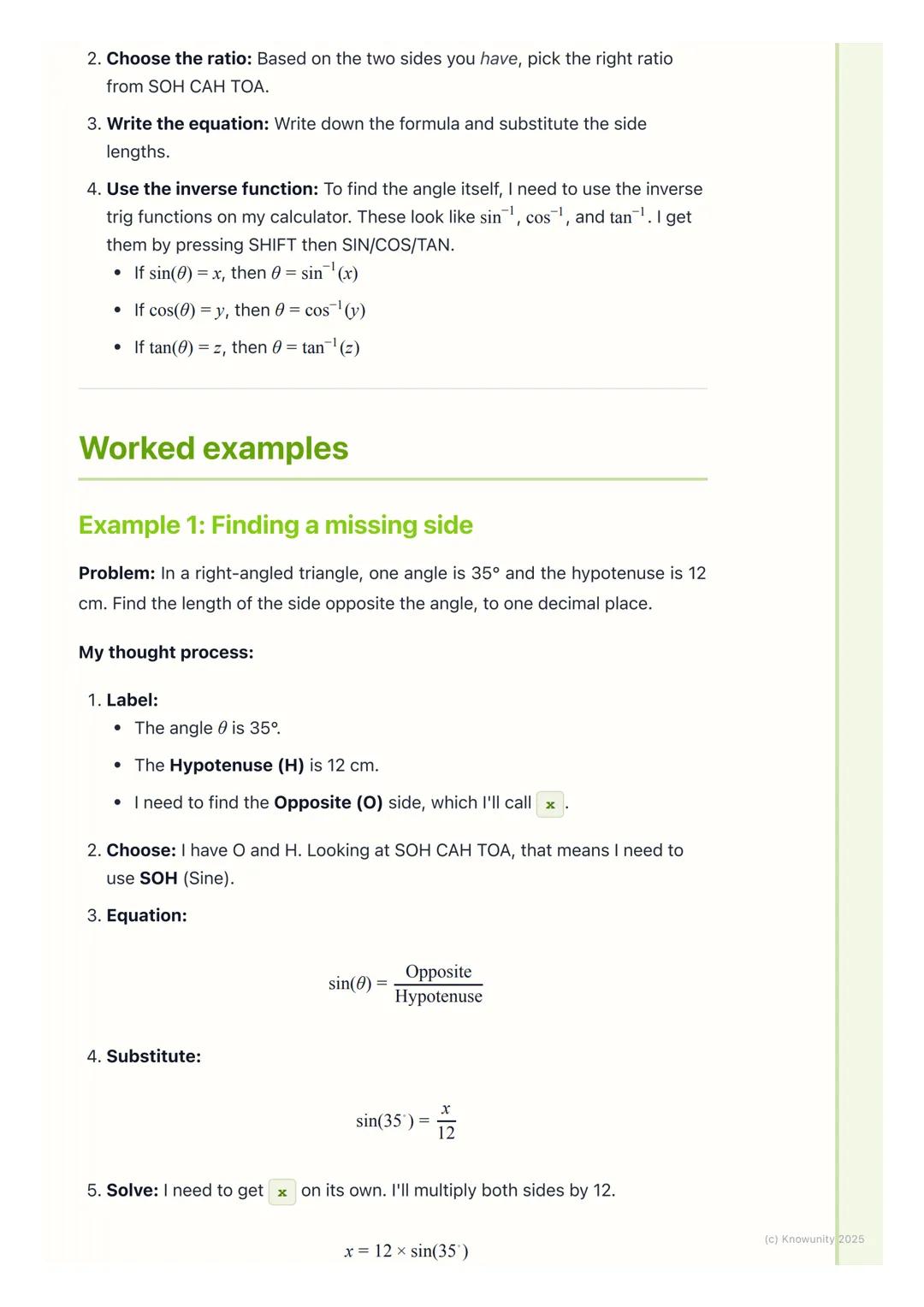
Finding Missing Angles
Working backwards from two known sides to find an angle requires inverse trigonometric functions. These appear as sin⁻¹, cos⁻¹, and tan⁻¹ on your calculator.
Start by labelling your sides and choosing the right ratio from SOH CAH TOA. Write your equation and substitute the side lengths you know.
To find the actual angle, use the inverse function. If cos(θ) = 2/5, then θ = cos⁻¹(2/5) = 66°. Access these functions by pressing SHIFT then the relevant trig button.
Calculator Alert: Make sure you're in DEGREE mode, not radians - this mistake costs students loads of marks!
5
of 9
Angles of Elevation and Depression
These concepts bring trigonometry into real-world scenarios you'll actually encounter. Understanding them makes word problems much easier to tackle.
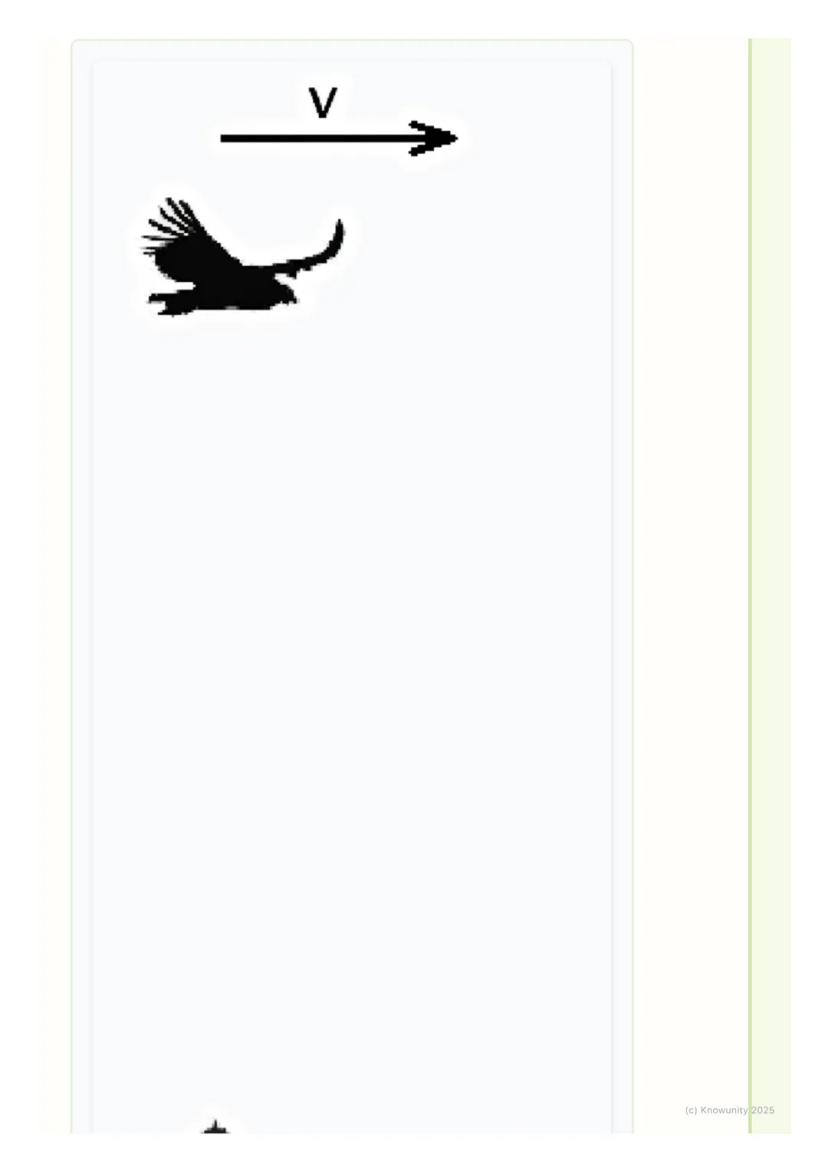
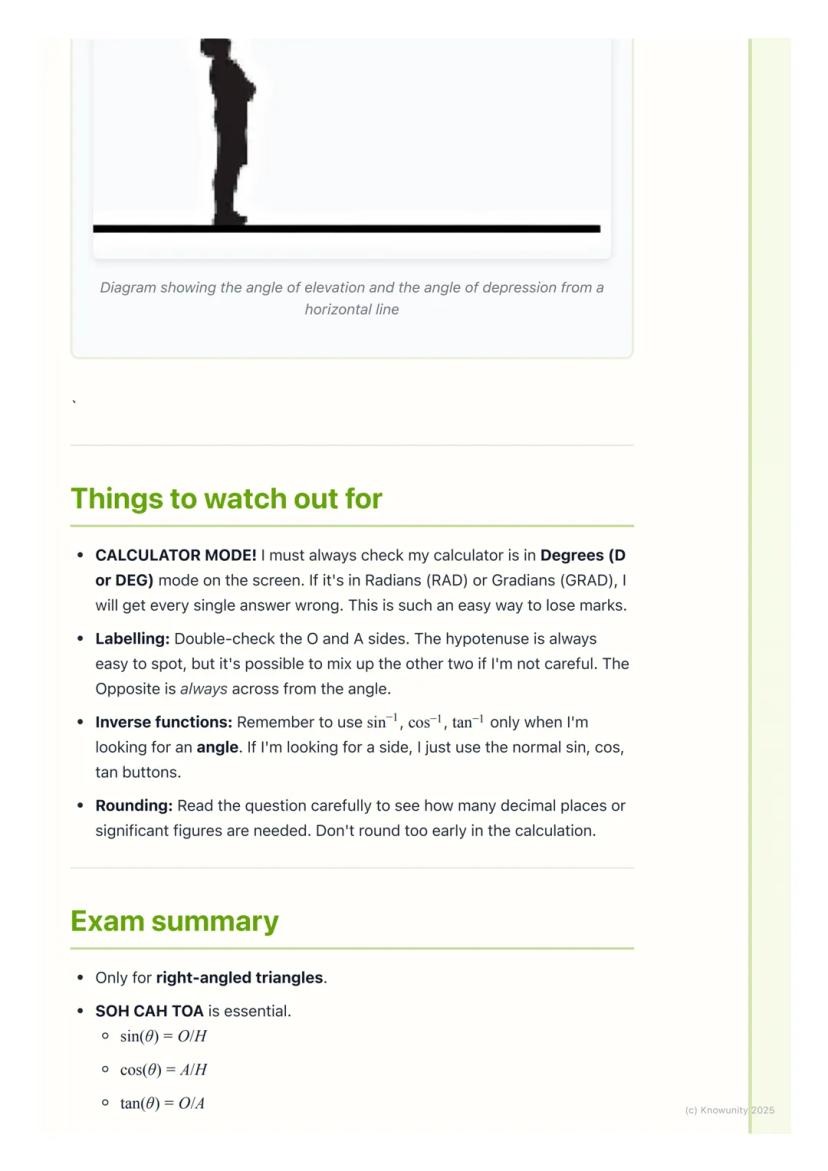
The angle of elevation is when you're looking UP from horizontal - like viewing the top of a building from ground level. The angle of depression is looking DOWN from horizontal - like a pilot viewing the ground.
Here's a neat fact: the angle of elevation from point A to point B always equals the angle of depression from point B to point A. They form alternate angles in a 'Z' pattern.
Real-World Connection: These angles are used in surveying, aviation, and architecture - skills that translate directly to careers!
6
of 9
Common Pitfalls and Exam Tips
Your calculator mode can make or break your exam performance. Always check you're in DEGREES mode (look for D or DEG on screen). Being in radians or gradians will give you completely wrong answers.
Double-check your side labelling every time. The hypotenuse is easy to spot, but mixing up opposite and adjacent sides is surprisingly common. Remember: opposite is always across from your angle.
Use inverse functions (sin⁻¹, cos⁻¹, tan⁻¹) only when finding angles, not sides. Read questions carefully for rounding instructions, and don't round until your final answer.
Exam Success: These basic checks will save you more marks than learning complex techniques - master the fundamentals first!
7
of 9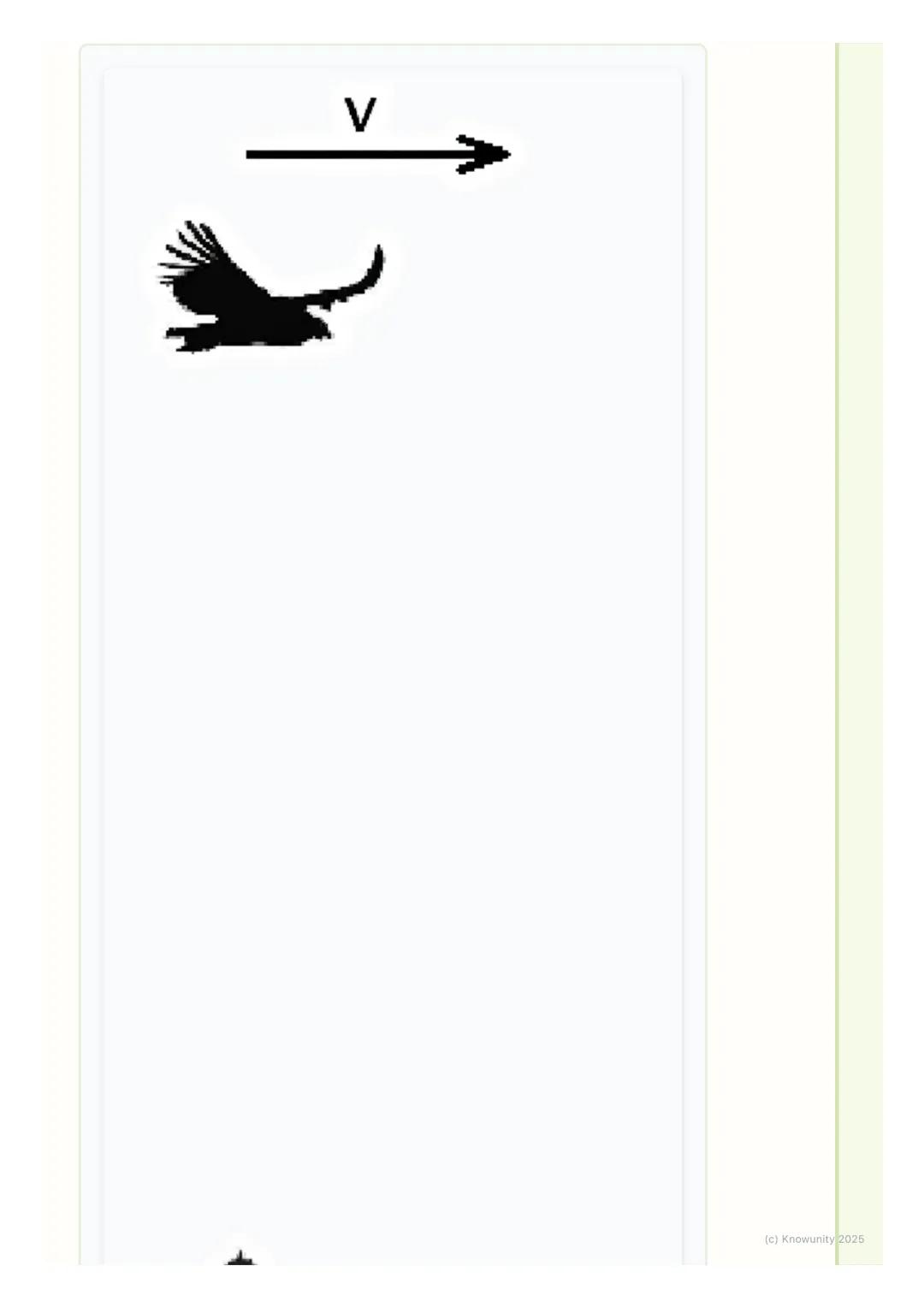
8
of 9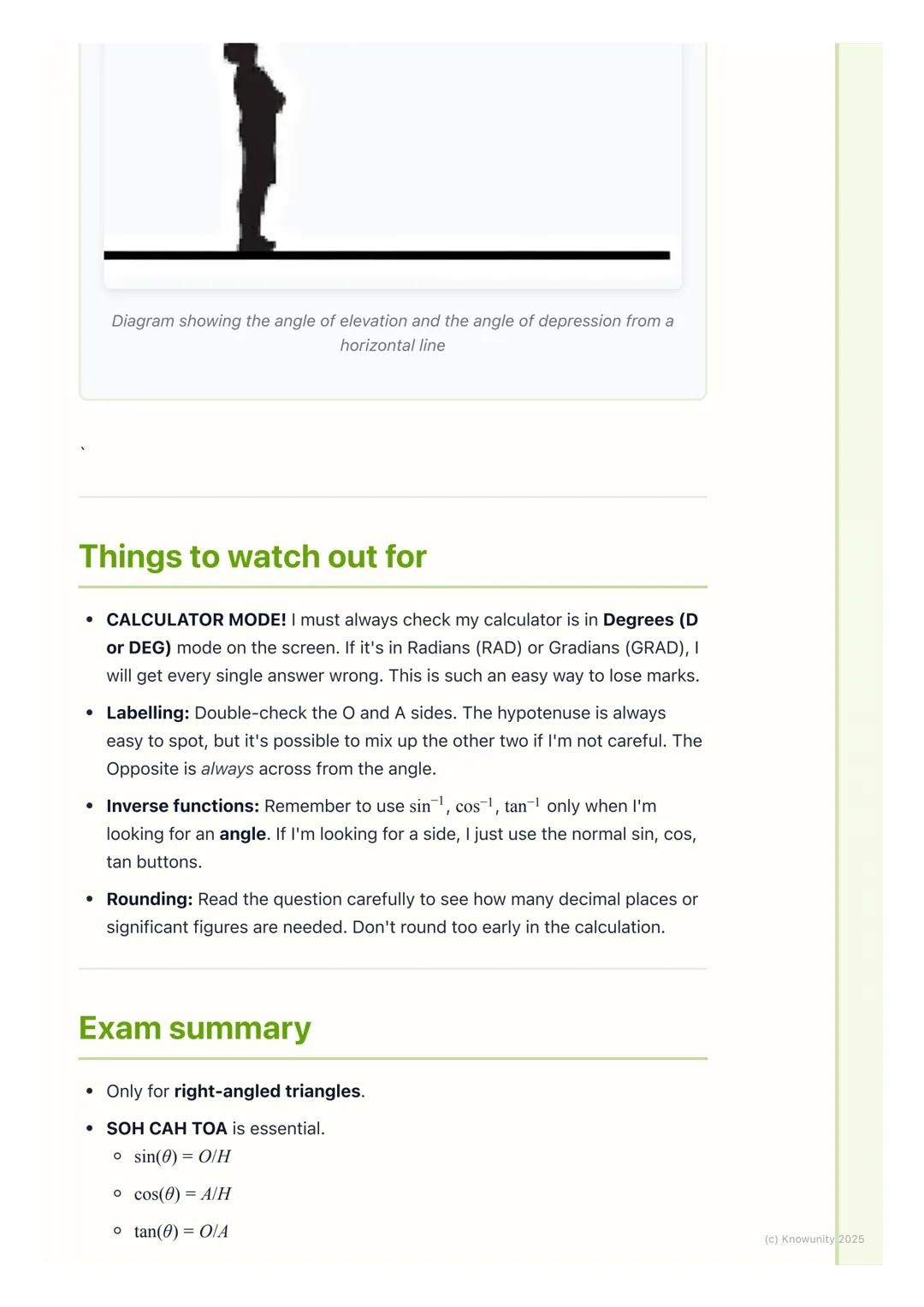
9
of 9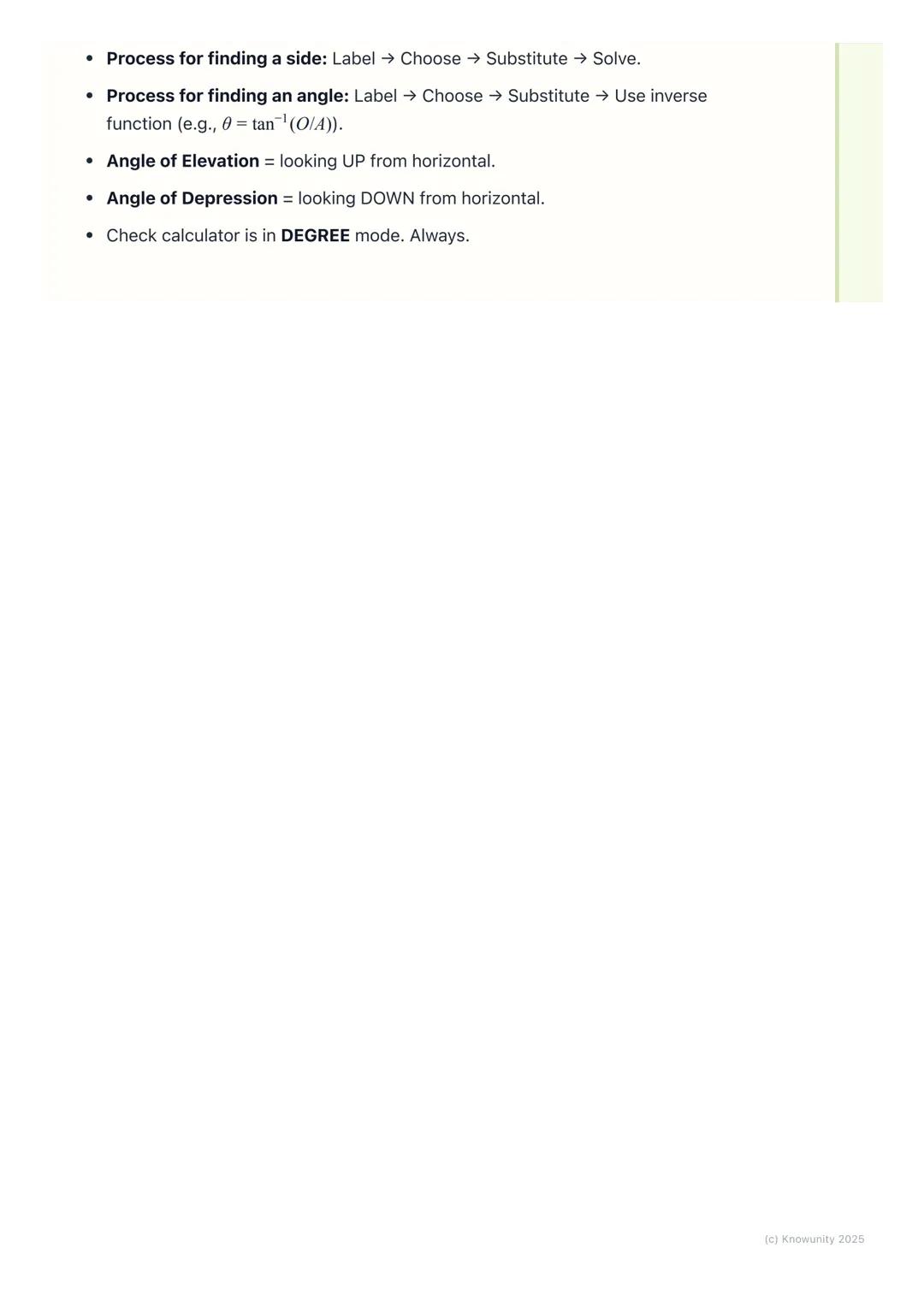
Pensávamos que não ias perguntar...
O que é o Companheiro de Aprendizagem com IA da Knowunity?
O nosso companheiro de aprendizagem com IA foi especificamente criado para as necessidades dos estudantes. Com base nos milhões de conteúdos que temos na plataforma, podemos fornecer respostas verdadeiramente significativas e relevantes para os estudantes. Mas não se trata apenas de respostas, o companheiro foca-se mais em guiar os estudantes através dos seus desafios diários de aprendizagem, com planos de estudo personalizados, quizzes ou conteúdos no chat e 100% de personalização baseada nas habilidades e desenvolvimentos do estudante.
Onde posso fazer o download da app Knowunity?
Pode descarregar a aplicação na Google Play Store e na Apple App Store.
Como posso receber o meu pagamento? Quanto posso ganhar?
Sim, tem acesso gratuito ao conteúdo da aplicação e ao nosso companheiro de IA. Para desbloquear determinadas funcionalidades da aplicação, pode adquirir o Knowunity Pro.
Conteúdos mais populares de Mathematics
8MathematicsAlgebra
Algebra
5th Year91
MathematicsAlgebra 2
Algebra notes focusing on the factor theorem, completing the square, -b formula, graphs of polynomials
5th Year130
MathematicsSolving Equations
This section focuses on solving one-step and two-step linear equations to find the value of an unknown variable.
1st Year131
MathematicsArithmetic sequences and series
With examples
5th Year130
MathematicsIntroduction to Probability
This topic introduces basic probability concepts, including calculating the probability of simple events and understanding the difference between experimental and theoretical probability.
2nd Year91
MathematicsMaths jc algebra
Maths jc
1st Year230
MathematicsNatural Numbers and Integers
Students will learn about positive whole numbers, zero, and negative whole numbers, and how to add, subtract, multiply, and divide them correctly.
1st Year131
MathematicsDifferential Calculus
Calculus is a topic that comes up nearly everywhere on your maths LC. This is just starter notes that could be useful end of 5th year or start of 6th year
5th Year271
Conteúdos mais populares
9 Irish
IrishIrish oral questions and answers
Questions and answers for the leaving cert oral
5th Year4264
 English
Key Quotes : Sive
Key Quotes and explanations: Sive
6th Year2842
IrishIrish oral questions
Outline of oral questions
5th Year2055
IrishIníon- le hÁine Durkin
Aine Durkin’s poem, Iníon: Themes & summary
5th Year850
IrishIrish poetry 2027
Iníon + Dínit an Bhróin
5th Year1133
IrishLC HL notes- Iníon (poem)
Includes poem in English and Irish, theme, key words & phrases
5th Year2284
EnglishCultural Context : Shawshank Redemption : Sive : Small Things Like These
Comparative Study : Cultural Context : Shawshank Redemption, Sive and Small Things Like These
6th Year1430
IrishMo Ghrá-sa (Idir Lúibíní)
Notes on mo ghrá-sa
5th Year380
IrishAn Gaeilge Aiste
Irish Language essay
6th Year1320
Não encontra o que procura? Explore outras disciplinas.
Avaliações dos nossos utilizadores. Eles adoraram tudo — e tu também vais adorar.
4.6/5App Store
4.7/5Google Play
A App é muito fácil de usar e está nem organizada. Encontrei tudo o que estava à procura até agora e consegui aprender muito com as apresentações! Vou usar a app para um trabalho escolar! E claro que também me ajuda muito como inspiração.
João Sutilizador iOS
Esta app é realmente incrível. Há tantas anotações de estudo e ajuda [...]. A minha disciplina problemática é Francês, por exemplo, e a app tem muitas opções de ajuda. Graças a esta app, melhorei o meu Francês. Eu recomendo a qualquer pessoa.
Sara C.utilizadora Android
Uau, estou realmente impressionado. Acabei de experimentar o app porque o vi anunciado muitas vezes e fiquei absolutamente surpreso. Este app é A AJUDA que você quer para a escola e, acima de tudo, oferece tantas coisas, como exercícios e folhas de fatos, que têm sido MUITO úteis para mim pessoalmente.
Anautilizadora iOS
Mathematics5 visualizações·Atualizado Jun 10, 2026·9 páginasMaster Trigonometry: Learn SOHCAHTOA for Real-Life Problems
Right-angled triangles are everywhere - from the ladders you climb to the buildings around you. Understanding how angles and sides relate in these triangles is crucial for solving real-world problems and acing your maths exams.
1
of 9
Cadastre-se para ver o conteúdo. É grátis!
- Acesso a todos os documentos
- Melhore suas notas
- Junte-se a milhões de estudantes
The Basics of Right-Angled Triangles
You'll use trigonometry in loads of practical situations like construction, navigation, and even video game design. The key is mastering the relationship between angles and side lengths in triangles with one 90° angle.
Getting the labelling right is absolutely crucial. The side names depend on which angle you're focusing on (usually called theta or θ). The hypotenuse is always the longest side opposite the right angle - that never changes.
The opposite side sits directly across from your angle θ. If you change the angle, the opposite side changes too. The adjacent side is next to angle θ, but it's not the hypotenuse.
Key Tip: Always label your triangle sides before attempting any calculation - this prevents costly mistakes!
2
of 9Cadastre-se para ver o conteúdo. É grátis!
- Acesso a todos os documentos
- Melhore suas notas
- Junte-se a milhões de estudantes
SOH CAH TOA - Your Best Friend
SOH CAH TOA is the magic acronym that'll save you in every exam. It represents the three main trigonometric ratios that link angles to side lengths.
SOH means sin(θ) = Opposite/Hypotenuse. CAH means cos(θ) = Adjacent/Hypotenuse. TOA means tan(θ) = Opposite/Adjacent.
These ratios ONLY work for right-angled triangles - don't try using them elsewhere! You'll encounter two main problem types: finding missing sides and finding missing angles.
Remember: These ratios are your toolkit for solving any right-angled triangle problem you'll face.
3
of 9Cadastre-se para ver o conteúdo. É grátis!
- Acesso a todos os documentos
- Melhore suas notas
- Junte-se a milhões de estudantes
Finding Missing Sides
When you've got one side and one angle (besides the 90° one), finding another side becomes straightforward with the right approach.
Follow this foolproof process: Label the sides O, A, and H relative to your given angle. Choose the correct ratio from SOH CAH TOA based on what you have and what you need. Write the equation and substitute your known values.
Finally, solve for the unknown by rearranging the equation. For example, if sin(35°) = x/12, then x = 12 × sin(35°) = 6.9 cm.
Pro Tip: Always double-check your labelling - mixing up opposite and adjacent is the most common mistake students make.
4
of 9Cadastre-se para ver o conteúdo. É grátis!
- Acesso a todos os documentos
- Melhore suas notas
- Junte-se a milhões de estudantes
Finding Missing Angles
Working backwards from two known sides to find an angle requires inverse trigonometric functions. These appear as sin⁻¹, cos⁻¹, and tan⁻¹ on your calculator.
Start by labelling your sides and choosing the right ratio from SOH CAH TOA. Write your equation and substitute the side lengths you know.
To find the actual angle, use the inverse function. If cos(θ) = 2/5, then θ = cos⁻¹(2/5) = 66°. Access these functions by pressing SHIFT then the relevant trig button.
Calculator Alert: Make sure you're in DEGREE mode, not radians - this mistake costs students loads of marks!
5
of 9Cadastre-se para ver o conteúdo. É grátis!
- Acesso a todos os documentos
- Melhore suas notas
- Junte-se a milhões de estudantes
Angles of Elevation and Depression
These concepts bring trigonometry into real-world scenarios you'll actually encounter. Understanding them makes word problems much easier to tackle.
The angle of elevation is when you're looking UP from horizontal - like viewing the top of a building from ground level. The angle of depression is looking DOWN from horizontal - like a pilot viewing the ground.
Here's a neat fact: the angle of elevation from point A to point B always equals the angle of depression from point B to point A. They form alternate angles in a 'Z' pattern.
Real-World Connection: These angles are used in surveying, aviation, and architecture - skills that translate directly to careers!
6
of 9Cadastre-se para ver o conteúdo. É grátis!
- Acesso a todos os documentos
- Melhore suas notas
- Junte-se a milhões de estudantes
Common Pitfalls and Exam Tips
Your calculator mode can make or break your exam performance. Always check you're in DEGREES mode (look for D or DEG on screen). Being in radians or gradians will give you completely wrong answers.
Double-check your side labelling every time. The hypotenuse is easy to spot, but mixing up opposite and adjacent sides is surprisingly common. Remember: opposite is always across from your angle.
Use inverse functions (sin⁻¹, cos⁻¹, tan⁻¹) only when finding angles, not sides. Read questions carefully for rounding instructions, and don't round until your final answer.
Exam Success: These basic checks will save you more marks than learning complex techniques - master the fundamentals first!
7
of 9Cadastre-se para ver o conteúdo. É grátis!
- Acesso a todos os documentos
- Melhore suas notas
- Junte-se a milhões de estudantes
8
of 9Cadastre-se para ver o conteúdo. É grátis!
- Acesso a todos os documentos
- Melhore suas notas
- Junte-se a milhões de estudantes
9
of 9Cadastre-se para ver o conteúdo. É grátis!
- Acesso a todos os documentos
- Melhore suas notas
- Junte-se a milhões de estudantes
Pensávamos que não ias perguntar...
O que é o Companheiro de Aprendizagem com IA da Knowunity?
O nosso companheiro de aprendizagem com IA foi especificamente criado para as necessidades dos estudantes. Com base nos milhões de conteúdos que temos na plataforma, podemos fornecer respostas verdadeiramente significativas e relevantes para os estudantes. Mas não se trata apenas de respostas, o companheiro foca-se mais em guiar os estudantes através dos seus desafios diários de aprendizagem, com planos de estudo personalizados, quizzes ou conteúdos no chat e 100% de personalização baseada nas habilidades e desenvolvimentos do estudante.
Onde posso fazer o download da app Knowunity?
Pode descarregar a aplicação na Google Play Store e na Apple App Store.
Como posso receber o meu pagamento? Quanto posso ganhar?
Sim, tem acesso gratuito ao conteúdo da aplicação e ao nosso companheiro de IA. Para desbloquear determinadas funcionalidades da aplicação, pode adquirir o Knowunity Pro.
Conteúdos mais populares de Mathematics
8MathematicsAlgebra
Algebra
5th Year91
MathematicsAlgebra 2
Algebra notes focusing on the factor theorem, completing the square, -b formula, graphs of polynomials
5th Year130
MathematicsSolving Equations
This section focuses on solving one-step and two-step linear equations to find the value of an unknown variable.
1st Year131
MathematicsArithmetic sequences and series
With examples
5th Year130
MathematicsIntroduction to Probability
This topic introduces basic probability concepts, including calculating the probability of simple events and understanding the difference between experimental and theoretical probability.
2nd Year91
MathematicsMaths jc algebra
Maths jc
1st Year230
MathematicsNatural Numbers and Integers
Students will learn about positive whole numbers, zero, and negative whole numbers, and how to add, subtract, multiply, and divide them correctly.
1st Year131
MathematicsDifferential Calculus
Calculus is a topic that comes up nearly everywhere on your maths LC. This is just starter notes that could be useful end of 5th year or start of 6th year
5th Year271
Conteúdos mais populares
9IrishIrish oral questions and answers
Questions and answers for the leaving cert oral
5th Year4264
EnglishKey Quotes : Sive
Key Quotes and explanations: Sive
6th Year2842
IrishIrish oral questions
Outline of oral questions
5th Year2055
IrishIníon- le hÁine Durkin
Aine Durkin’s poem, Iníon: Themes & summary
5th Year850
IrishIrish poetry 2027
Iníon + Dínit an Bhróin
5th Year1133
IrishLC HL notes- Iníon (poem)
Includes poem in English and Irish, theme, key words & phrases
5th Year2284
EnglishCultural Context : Shawshank Redemption : Sive : Small Things Like These
Comparative Study : Cultural Context : Shawshank Redemption, Sive and Small Things Like These
6th Year1430
IrishMo Ghrá-sa (Idir Lúibíní)
Notes on mo ghrá-sa
5th Year380
IrishAn Gaeilge Aiste
Irish Language essay
6th Year1320
Não encontra o que procura? Explore outras disciplinas.
Avaliações dos nossos utilizadores. Eles adoraram tudo — e tu também vais adorar.
4.6/5App Store
4.7/5Google Play
A App é muito fácil de usar e está nem organizada. Encontrei tudo o que estava à procura até agora e consegui aprender muito com as apresentações! Vou usar a app para um trabalho escolar! E claro que também me ajuda muito como inspiração.
João Sutilizador iOS
Esta app é realmente incrível. Há tantas anotações de estudo e ajuda [...]. A minha disciplina problemática é Francês, por exemplo, e a app tem muitas opções de ajuda. Graças a esta app, melhorei o meu Francês. Eu recomendo a qualquer pessoa.
Sara C.utilizadora Android
Uau, estou realmente impressionado. Acabei de experimentar o app porque o vi anunciado muitas vezes e fiquei absolutamente surpreso. Este app é A AJUDA que você quer para a escola e, acima de tudo, oferece tantas coisas, como exercícios e folhas de fatos, que têm sido MUITO úteis para mim pessoalmente.
Anautilizadora iOS