
Learning the months of the year in French is essential...
 French3 visualizações·Atualizado Jun 14, 2026·4 páginas
Les Mois de l'Année en Français
1 / 4
1
of 4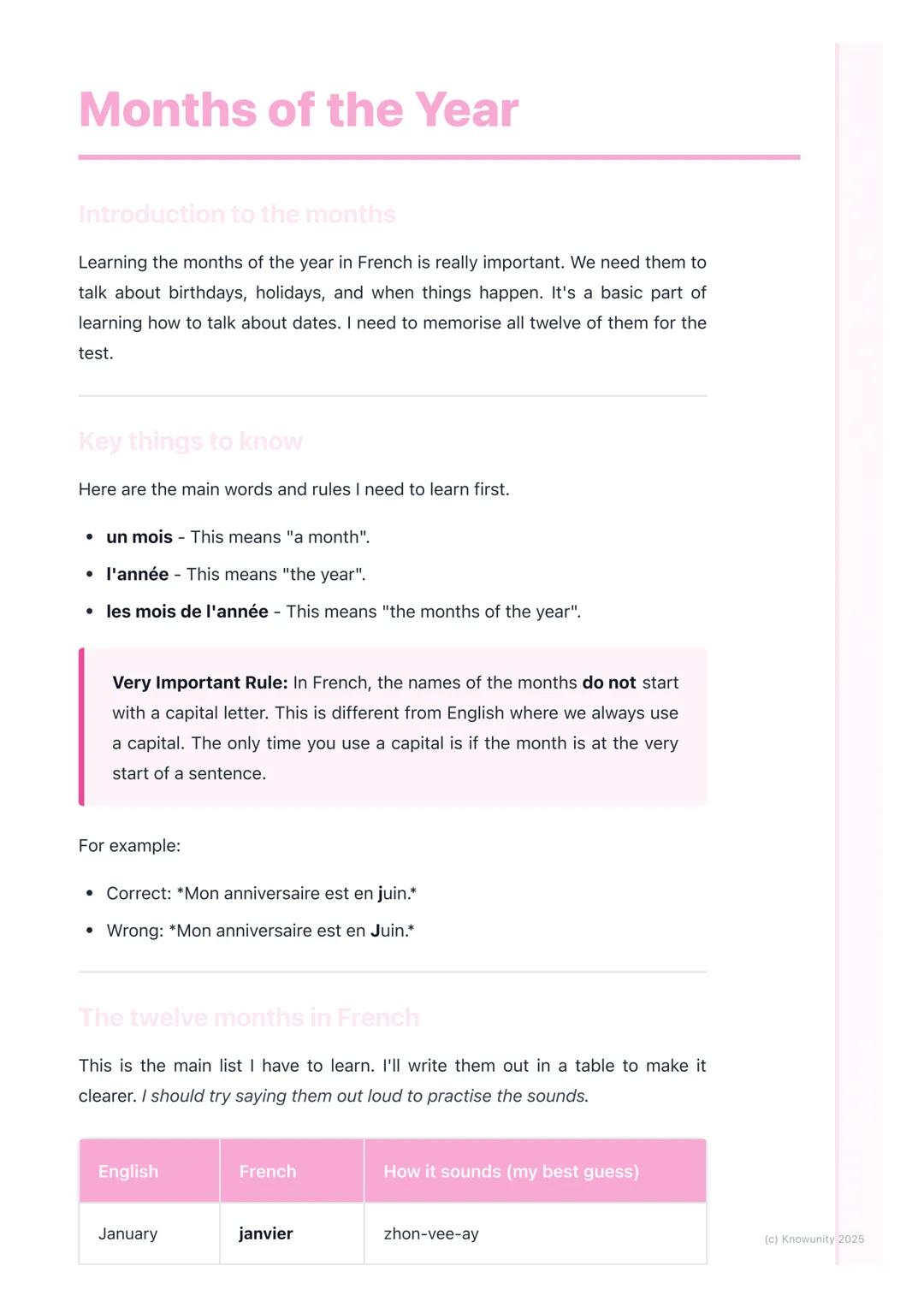
Getting Started with French Months
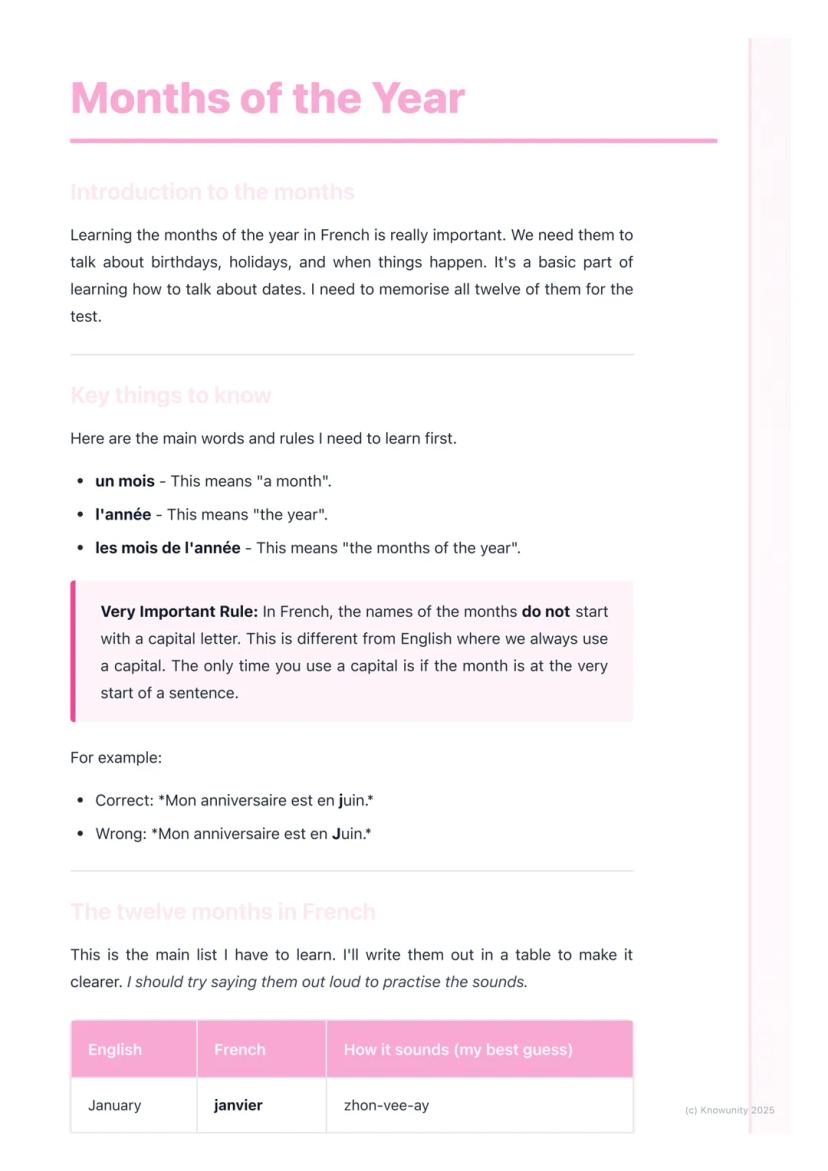
You'll use French months constantly - from talking about your birthday to planning holidays. The good news is that many of them look quite similar to English, so you're already halfway there!
There are three key terms to master first: un mois (a month), l'année (the year), and les mois de l'année (the months of the year). These will pop up everywhere when discussing dates.
Here's the game-changer that trips up loads of students: French months never start with capital letters unless they're at the beginning of a sentence. So it's "Mon anniversaire est en juin" (My birthday is in June), not "Mon anniversaire est en Juin."
Quick Tip: Practice saying the months out loud - hearing yourself say them helps with spelling and pronunciation!
2
of 4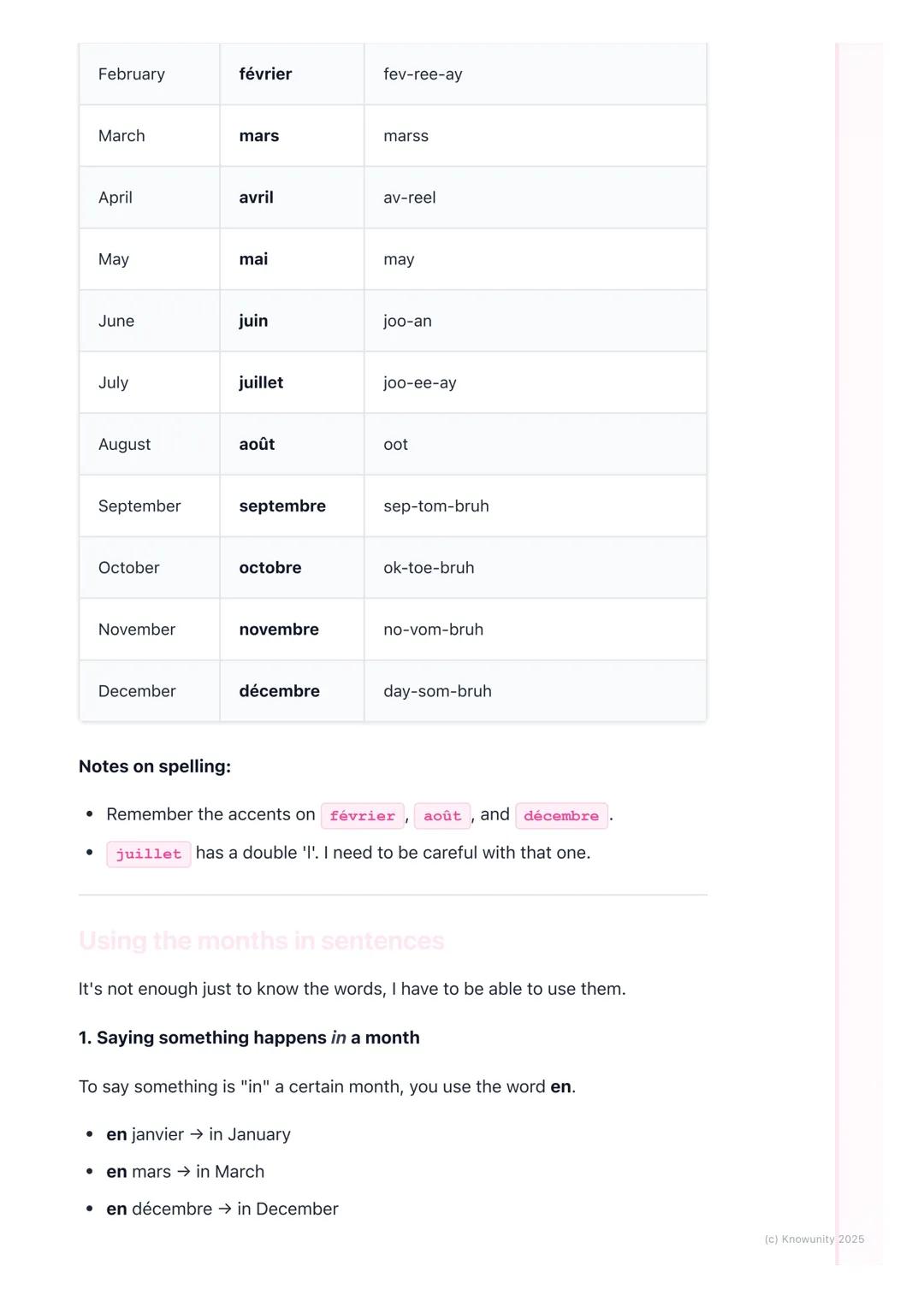
The Twelve Months You Need to Know
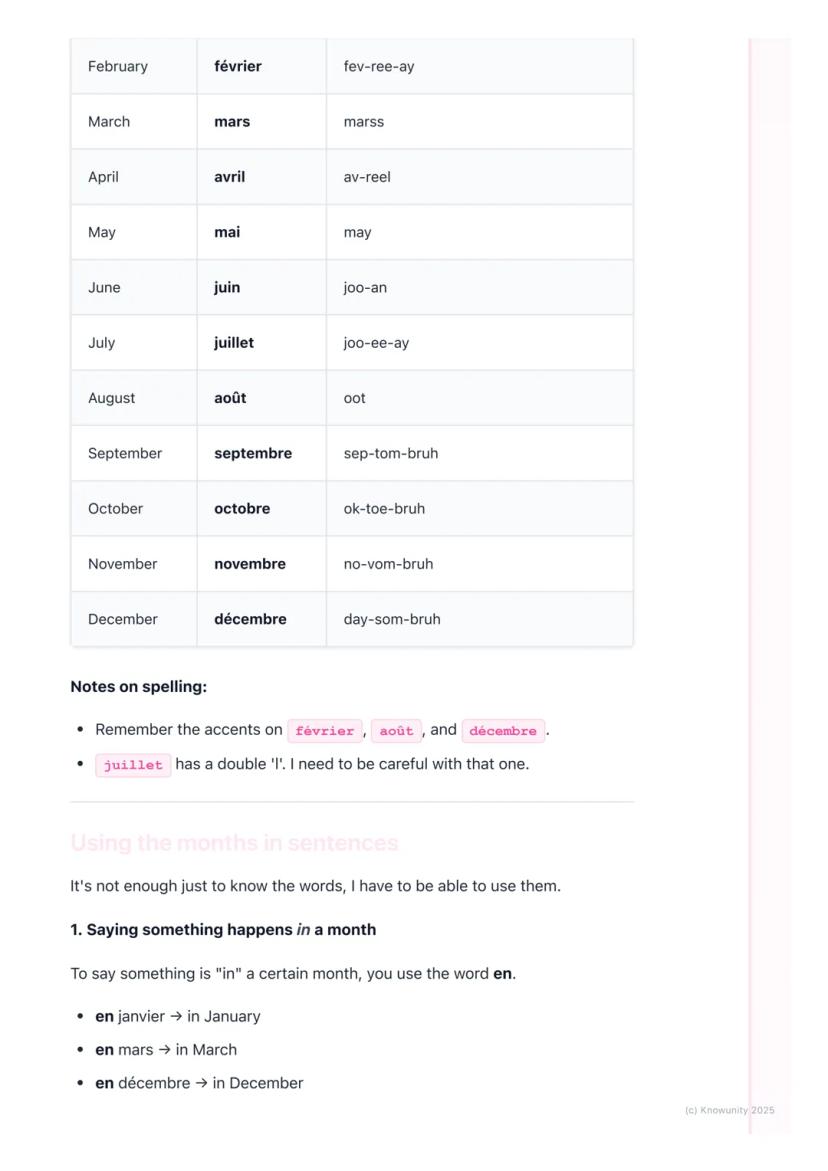
Here are all twelve months with their pronunciation guides. Don't worry about getting the pronunciation perfect straight away - just have a go and you'll improve with practice.
janvier , février , mars (marss), avril , mai (may), juin - these first six are quite different from English.
The summer and autumn months are more familiar: juillet , août (oot), septembre , octobre , novembre , décembre .
Watch out for the tricky spellings: février, août, and décembre all have accents, whilst juillet has a sneaky double 'l' that's easy to forget.
Memory Hack: The last four months (septembre, octobre, novembre, décembre) are dead similar to English - use these as your confidence boosters!
3
of 4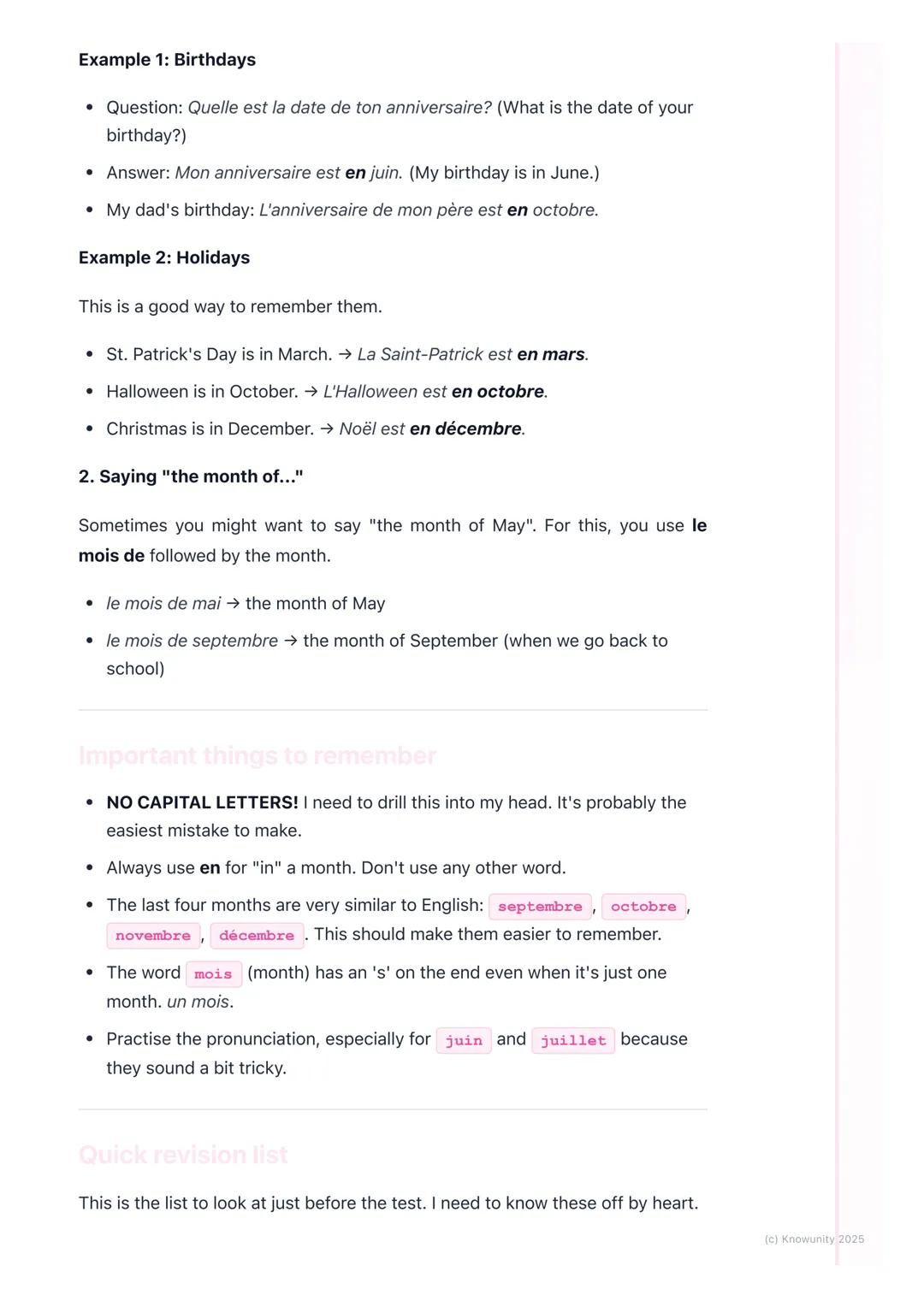
Using Months in Real Conversations
Now for the practical bit - actually using these months in sentences. This is where French gets really useful for everyday chat.
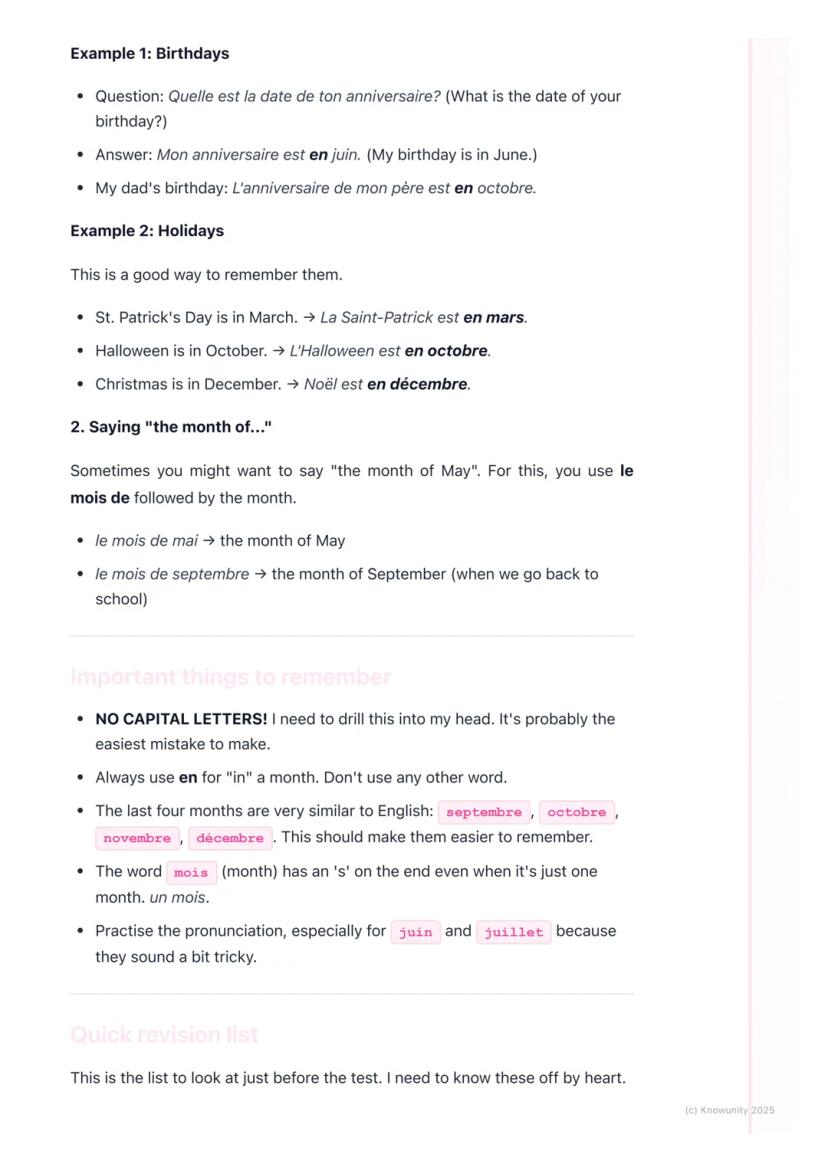
To say something happens "in" a month, you always use en. So "en janvier" means "in January", "en mars" means "in March", and so on. This works for absolutely everything - birthdays, holidays, school terms.
For birthdays, you'll often hear "Mon anniversaire est en juin" (My birthday is in June). For holidays, try "Noël est en décembre" (Christmas is in December) or "La Saint-Patrick est en mars" (St. Patrick's Day is in March).
Sometimes you might need to say "the month of..." - that's when you use le mois de followed by the month name, like "le mois de septembre" (the month of September).
Test Prep: Remember - always use 'en' for 'in' with months, never any other word. This is a common exam question!
4
of 4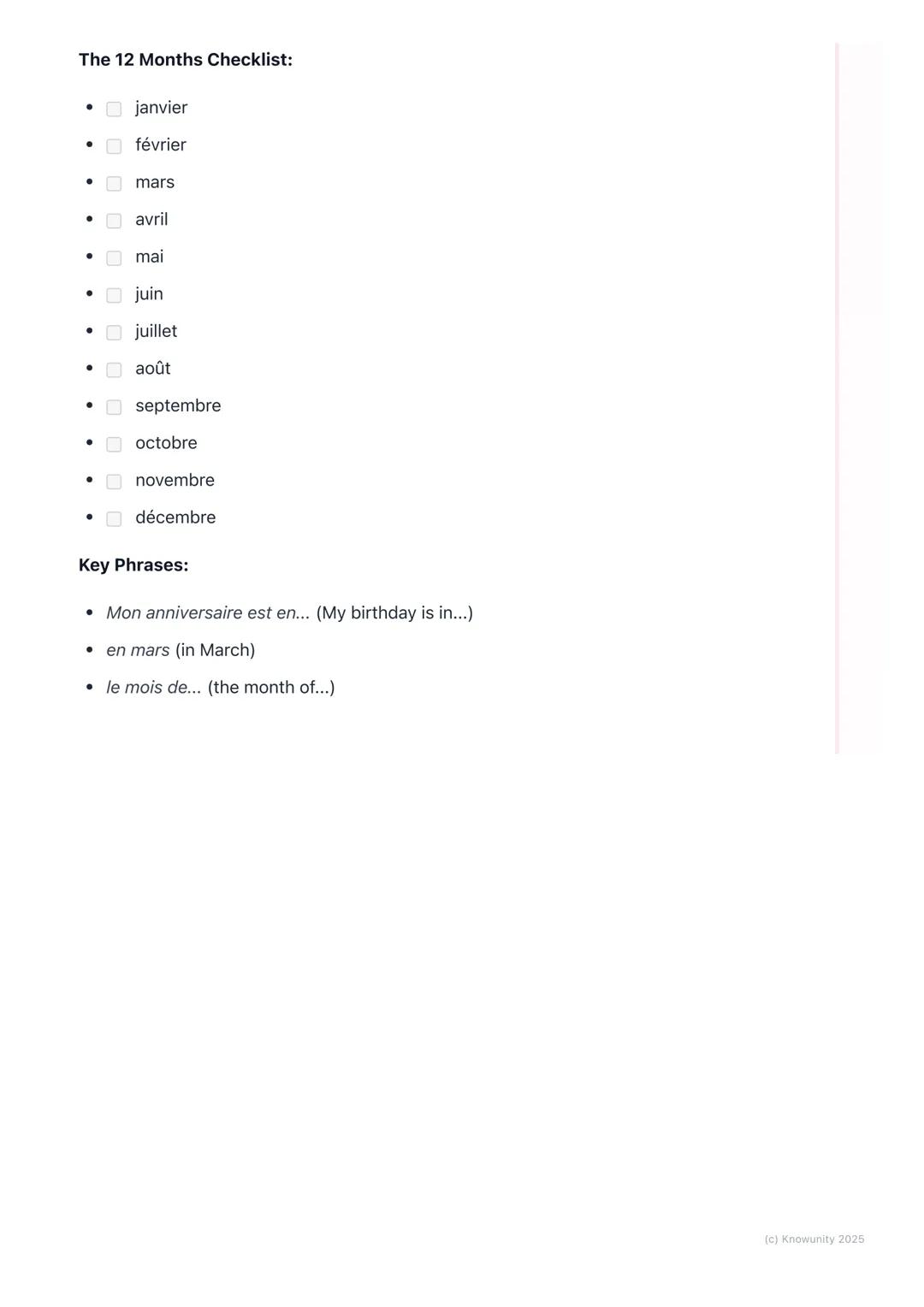
Your Final Revision Checklist
Right, here's your quick-fire revision list for before any test or when you need a speedy reminder.
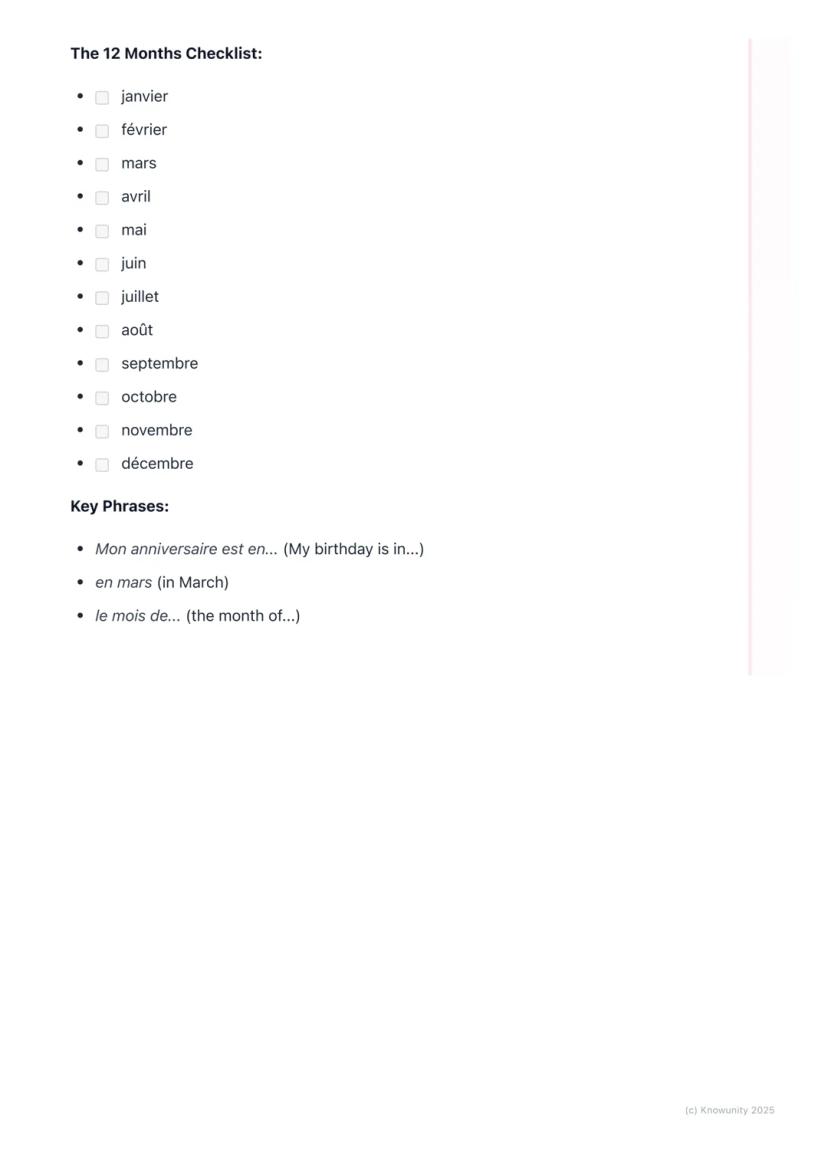
The twelve months in order: janvier, février, mars, avril, mai, juin, juillet, août, septembre, octobre, novembre, décembre. Run through these a few times until they flow naturally.
Your essential phrases are "Mon anniversaire est en..." (My birthday is in...), "en mars" (in March), and "le mois de..." (the month of...). These three patterns will cover most situations you'll encounter.
Remember the golden rules: no capitals unless it's the start of a sentence, always use 'en' for 'in', and don't panic about pronunciation - you'll get better with practice.
Confidence Booster: You've already got this! Many French months are similar to English, and with a bit of practice, you'll be using them naturally in conversations.
Pensávamos que não ias perguntar...
O que é o Companheiro de Aprendizagem com IA da Knowunity?
O nosso companheiro de aprendizagem com IA foi especificamente criado para as necessidades dos estudantes. Com base nos milhões de conteúdos que temos na plataforma, podemos fornecer respostas verdadeiramente significativas e relevantes para os estudantes. Mas não se trata apenas de respostas, o companheiro foca-se mais em guiar os estudantes através dos seus desafios diários de aprendizagem, com planos de estudo personalizados, quizzes ou conteúdos no chat e 100% de personalização baseada nas habilidades e desenvolvimentos do estudante.
Onde posso fazer o download da app Knowunity?
Pode descarregar a aplicação na Google Play Store e na Apple App Store.
Como posso receber o meu pagamento? Quanto posso ganhar?
Sim, tem acesso gratuito ao conteúdo da aplicação e ao nosso companheiro de IA. Para desbloquear determinadas funcionalidades da aplicação, pode adquirir o Knowunity Pro.
Conteúdos mais populares de French
2Conteúdos mais populares
9 Irish
IrishIrish oral questions and answers
Questions and answers for the leaving cert oral
5th Year4264
 English
Key Quotes : Sive
Key Quotes and explanations: Sive
6th Year2842
IrishIrish oral questions
Outline of oral questions
5th Year2055
IrishIníon- le hÁine Durkin
Aine Durkin’s poem, Iníon: Themes & summary
5th Year890
IrishIrish poetry 2027
Iníon + Dínit an Bhróin
5th Year1153
IrishLC HL notes- Iníon (poem)
Includes poem in English and Irish, theme, key words & phrases
5th Year2304
EnglishCultural Context : Shawshank Redemption : Sive : Small Things Like These
Comparative Study : Cultural Context : Shawshank Redemption, Sive and Small Things Like These
6th Year1430
IrishMo Ghrá-sa (Idir Lúibíní)
Notes on mo ghrá-sa
5th Year380
IrishAn Gaeilge Aiste
Irish Language essay
6th Year1320
Não encontra o que procura? Explore outras disciplinas.
Avaliações dos nossos utilizadores. Eles adoraram tudo — e tu também vais adorar.
4.6/5App Store
4.7/5Google Play
A App é muito fácil de usar e está nem organizada. Encontrei tudo o que estava à procura até agora e consegui aprender muito com as apresentações! Vou usar a app para um trabalho escolar! E claro que também me ajuda muito como inspiração.
João Sutilizador iOS
Esta app é realmente incrível. Há tantas anotações de estudo e ajuda [...]. A minha disciplina problemática é Francês, por exemplo, e a app tem muitas opções de ajuda. Graças a esta app, melhorei o meu Francês. Eu recomendo a qualquer pessoa.
Sara C.utilizadora Android
Uau, estou realmente impressionado. Acabei de experimentar o app porque o vi anunciado muitas vezes e fiquei absolutamente surpreso. Este app é A AJUDA que você quer para a escola e, acima de tudo, oferece tantas coisas, como exercícios e folhas de fatos, que têm sido MUITO úteis para mim pessoalmente.
Anautilizadora iOS
French3 visualizações·Atualizado Jun 14, 2026·4 páginasLes Mois de l'Année en Français
Learning the months of the year in French is essential for talking about birthdays, holidays, and when events happen. It's one of the most practical things you'll use when speaking French, and once you get the hang of it, you'll...
1
of 4
Cadastre-se para ver o conteúdo. É grátis!
- Acesso a todos os documentos
- Melhore suas notas
- Junte-se a milhões de estudantes
Getting Started with French Months
You'll use French months constantly - from talking about your birthday to planning holidays. The good news is that many of them look quite similar to English, so you're already halfway there!
There are three key terms to master first: un mois (a month), l'année (the year), and les mois de l'année (the months of the year). These will pop up everywhere when discussing dates.
Here's the game-changer that trips up loads of students: French months never start with capital letters unless they're at the beginning of a sentence. So it's "Mon anniversaire est en juin" (My birthday is in June), not "Mon anniversaire est en Juin."
Quick Tip: Practice saying the months out loud - hearing yourself say them helps with spelling and pronunciation!
2
of 4Cadastre-se para ver o conteúdo. É grátis!
- Acesso a todos os documentos
- Melhore suas notas
- Junte-se a milhões de estudantes
The Twelve Months You Need to Know
Here are all twelve months with their pronunciation guides. Don't worry about getting the pronunciation perfect straight away - just have a go and you'll improve with practice.
janvier , février , mars (marss), avril , mai (may), juin - these first six are quite different from English.
The summer and autumn months are more familiar: juillet , août (oot), septembre , octobre , novembre , décembre .
Watch out for the tricky spellings: février, août, and décembre all have accents, whilst juillet has a sneaky double 'l' that's easy to forget.
Memory Hack: The last four months (septembre, octobre, novembre, décembre) are dead similar to English - use these as your confidence boosters!
3
of 4Cadastre-se para ver o conteúdo. É grátis!
- Acesso a todos os documentos
- Melhore suas notas
- Junte-se a milhões de estudantes
Using Months in Real Conversations
Now for the practical bit - actually using these months in sentences. This is where French gets really useful for everyday chat.
To say something happens "in" a month, you always use en. So "en janvier" means "in January", "en mars" means "in March", and so on. This works for absolutely everything - birthdays, holidays, school terms.
For birthdays, you'll often hear "Mon anniversaire est en juin" (My birthday is in June). For holidays, try "Noël est en décembre" (Christmas is in December) or "La Saint-Patrick est en mars" (St. Patrick's Day is in March).
Sometimes you might need to say "the month of..." - that's when you use le mois de followed by the month name, like "le mois de septembre" (the month of September).
Test Prep: Remember - always use 'en' for 'in' with months, never any other word. This is a common exam question!
4
of 4Cadastre-se para ver o conteúdo. É grátis!
- Acesso a todos os documentos
- Melhore suas notas
- Junte-se a milhões de estudantes
Your Final Revision Checklist
Right, here's your quick-fire revision list for before any test or when you need a speedy reminder.
The twelve months in order: janvier, février, mars, avril, mai, juin, juillet, août, septembre, octobre, novembre, décembre. Run through these a few times until they flow naturally.
Your essential phrases are "Mon anniversaire est en..." (My birthday is in...), "en mars" (in March), and "le mois de..." (the month of...). These three patterns will cover most situations you'll encounter.
Remember the golden rules: no capitals unless it's the start of a sentence, always use 'en' for 'in', and don't panic about pronunciation - you'll get better with practice.
Confidence Booster: You've already got this! Many French months are similar to English, and with a bit of practice, you'll be using them naturally in conversations.
Pensávamos que não ias perguntar...
O que é o Companheiro de Aprendizagem com IA da Knowunity?
O nosso companheiro de aprendizagem com IA foi especificamente criado para as necessidades dos estudantes. Com base nos milhões de conteúdos que temos na plataforma, podemos fornecer respostas verdadeiramente significativas e relevantes para os estudantes. Mas não se trata apenas de respostas, o companheiro foca-se mais em guiar os estudantes através dos seus desafios diários de aprendizagem, com planos de estudo personalizados, quizzes ou conteúdos no chat e 100% de personalização baseada nas habilidades e desenvolvimentos do estudante.
Onde posso fazer o download da app Knowunity?
Pode descarregar a aplicação na Google Play Store e na Apple App Store.
Como posso receber o meu pagamento? Quanto posso ganhar?
Sim, tem acesso gratuito ao conteúdo da aplicação e ao nosso companheiro de IA. Para desbloquear determinadas funcionalidades da aplicação, pode adquirir o Knowunity Pro.
Conteúdos mais populares de French
2Conteúdos mais populares
9IrishIrish oral questions and answers
Questions and answers for the leaving cert oral
5th Year4264
EnglishKey Quotes : Sive
Key Quotes and explanations: Sive
6th Year2842
IrishIrish oral questions
Outline of oral questions
5th Year2055
IrishIníon- le hÁine Durkin
Aine Durkin’s poem, Iníon: Themes & summary
5th Year890
IrishIrish poetry 2027
Iníon + Dínit an Bhróin
5th Year1153
IrishLC HL notes- Iníon (poem)
Includes poem in English and Irish, theme, key words & phrases
5th Year2304
EnglishCultural Context : Shawshank Redemption : Sive : Small Things Like These
Comparative Study : Cultural Context : Shawshank Redemption, Sive and Small Things Like These
6th Year1430
IrishMo Ghrá-sa (Idir Lúibíní)
Notes on mo ghrá-sa
5th Year380
IrishAn Gaeilge Aiste
Irish Language essay
6th Year1320
Não encontra o que procura? Explore outras disciplinas.
Avaliações dos nossos utilizadores. Eles adoraram tudo — e tu também vais adorar.
4.6/5App Store
4.7/5Google Play
A App é muito fácil de usar e está nem organizada. Encontrei tudo o que estava à procura até agora e consegui aprender muito com as apresentações! Vou usar a app para um trabalho escolar! E claro que também me ajuda muito como inspiração.
João Sutilizador iOS
Esta app é realmente incrível. Há tantas anotações de estudo e ajuda [...]. A minha disciplina problemática é Francês, por exemplo, e a app tem muitas opções de ajuda. Graças a esta app, melhorei o meu Francês. Eu recomendo a qualquer pessoa.
Sara C.utilizadora Android
Uau, estou realmente impressionado. Acabei de experimentar o app porque o vi anunciado muitas vezes e fiquei absolutamente surpreso. Este app é A AJUDA que você quer para a escola e, acima de tudo, oferece tantas coisas, como exercícios e folhas de fatos, que têm sido MUITO úteis para mim pessoalmente.
Anautilizadora iOS